The Role of Exhaust Manifolds in Engine Performance
Exhaust manifolds play a crucial role in engine performance, but what makes them truly efficient? The right material and manufacturing process are key to ensuring they function optimally under extreme conditions.
In this article, we will explore how aluminum gravity casting stands out as an ideal solution for exhaust manifolds. You will learn why it's the perfect choice when weight reduction and heat dissipation are critical factors in design.
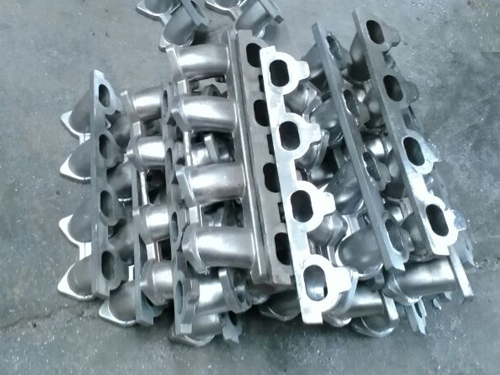
Why Aluminum Gravity Casting Is Ideal for Manifolds
Key Benefits of Aluminum in Exhaust Manifolds
Lightweight
Aluminum is known for its low density, which significantly reduces the overall weight of the exhaust manifold. This weight reduction directly improves fuel efficiency and vehicle performance. Lighter parts contribute to a reduction in the overall vehicle weight, improving acceleration and braking capabilities while also reducing the strain on the engine. With reduced weight, the engine does not need to work as hard to move the vehicle, leading to overall better efficiency.
Thermal Conductivity
Aluminum’s high thermal conductivity is crucial in exhaust manifold applications. It helps efficiently dissipate the heat generated by the engine, reducing the risk of overheating. The superior heat dissipation ensures that the exhaust gases flow smoothly and that the engine operates at optimal temperatures, preventing overheating that can lead to engine failure. In high-performance engines, managing temperature is even more critical, as consistent temperature control directly impacts engine reliability and performance.
Opting for aluminum gravity casting helps achieve both reduced weight and improved heat management in exhaust manifold production, leading to better overall engine performance. The ability to effectively manage both weight and heat in a critical engine component like the exhaust manifold directly contributes to overall vehicle longevity.
How the Gravity Casting Process Works
Gravity casting, also known as permanent mold casting, involves pouring molten aluminum into a metal mold under the influence of gravity. The mold is preheated to avoid rapid cooling, which can cause defects like porosity. As the aluminum solidifies, it takes the shape of the mold, resulting in a component with high dimensional accuracy.
This method contrasts with other casting techniques like die casting, which uses high pressure to force molten metal into molds, or sand casting, which uses disposable molds. Gravity casting provides a more consistent and cost-effective approach for producing parts with fewer defects. Since it does not rely on high pressure, it avoids some of the drawbacks of die casting, such as the risk of trapping air bubbles or inconsistencies in the material.
Precision and Cost Benefits of Gravity Casting
One of the major advantages of gravity casting is its ability to produce highly precise components with tight tolerances. It minimizes the need for post-processing, reducing overall production time and cost. For exhaust manifolds, this means parts that fit perfectly into the engine assembly without the need for extensive modifications.
Unlike die casting, which requires more expensive equipment, gravity casting uses reusable molds, making it a more cost-effective option for both small and medium-volume productions. The cost-efficiency of gravity casting is especially beneficial for manufacturers looking to produce quality exhaust manifolds at a reasonable price.
Gravity casting offers a perfect balance of cost-efficiency and precision for producing exhaust manifolds, especially in mid-range production runs, making it a great choice for automotive manufacturers looking to optimize both quality and cost. It is an ideal solution for manufacturers seeking to meet the demands of the automotive industry, where high-performance parts are needed at a competitive price.
How Aluminum Gravity Casting Benefits Exhaust Manifolds
Meeting Design Complexity and Precision Needs
Exhaust manifolds often require complex geometries to ensure efficient gas flow. Gravity casting excels in producing intricate shapes with high precision, making it ideal for creating manifolds with specific design requirements. Whether it's incorporating internal passages or ensuring uniform wall thickness, gravity casting ensures that these features are met without compromising on quality.
Aluminum’s ability to form intricate features, such as thin walls and complex contours, allows manufacturers to achieve the desired precision for exhaust manifolds, even in challenging designs. This capability ensures that the manifold fits seamlessly within the engine assembly, contributing to better engine performance. This precision is particularly important in high-performance engines, where even small design flaws can impact performance.
Thermal Management and Durability Advantages
Aluminum’s thermal conductivity makes it a perfect material for managing the heat generated in engine operations. The ability to dissipate heat quickly ensures that exhaust gases don’t overheat, preventing potential damage to engine components. This is especially important in modern vehicles where engines are designed for higher power output and efficiency. A manifold that cannot efficiently handle the heat generated by the engine can lead to overheating and eventual engine failure.
Additionally, aluminum is highly resistant to corrosion, which is a significant advantage in harsh automotive environments. This corrosion resistance ensures that the exhaust manifold maintains its integrity over time, even when exposed to high temperatures and chemicals. This enhances the longevity of exhaust manifolds, reducing the frequency of replacements and the cost of maintenance.
The combination of excellent heat dissipation and corrosion resistance in aluminum increases the lifespan of exhaust manifolds, reducing long-term maintenance costs and ensuring that the engine operates smoothly for longer periods.
Reducing Weight for Better Performance
The lightweight nature of aluminum results in less weight added to the engine, improving the overall vehicle dynamics. Lighter parts reduce the overall weight of the vehicle, improving acceleration, braking, and handling. Additionally, reducing the weight of the exhaust manifold leads to better fuel efficiency. The lighter the vehicle, the less energy is required to move it, which directly translates to lower fuel consumption.
A lighter exhaust manifold reduces the vehicle’s total weight, contributing to better fuel efficiency, faster acceleration, and overall improved engine performance. The reduction in weight is especially crucial in high-performance and racing vehicles, where every kilogram counts. Manufacturers can achieve improved performance and lower emissions by opting for lighter exhaust components.
Choosing aluminum gravity casting helps reduce overall vehicle weight while ensuring strong, durable exhaust manifolds, contributing to better fuel efficiency and faster vehicle performance. This is a key factor in making vehicles more environmentally friendly and cost-effective for consumers.
Comparing Aluminum Gravity Casting with Other Methods
Gravity Casting vs. Die Casting: A Performance Comparison
While both gravity casting and die casting are commonly used in manufacturing automotive parts, they differ significantly in the way molten metal is poured into the mold. Die casting uses high pressure to inject molten aluminum into a mold, which results in higher precision but also higher costs due to the need for specialized equipment.
Gravity casting, on the other hand, is a more cost-effective method that uses gravity to fill the mold. While it may not offer the extreme precision of die casting, it provides a balance of cost-efficiency and sufficient accuracy for many automotive components like exhaust manifolds. This makes it an ideal option for medium-volume productions where precision is important but cost efficiency is a priority. Gravity casting provides a simpler and more sustainable approach without sacrificing performance.
Gravity Casting vs. Sand Casting: Which Is Better for Manifolds?
Sand casting is typically used for larger, simpler parts, and while it can handle complex shapes, it doesn't offer the same level of precision as gravity casting. Sand casting also has a slower production cycle, and the molds must be replaced after each use, which can increase costs over time.
Gravity casting provides smoother surfaces and higher dimensional accuracy, which is especially important in exhaust manifolds, where precise fitting is required. It also offers better consistency, ensuring that each part meets the required specifications.
Unlike sand casting, which involves creating a new mold for each part, gravity casting uses reusable molds, making it more environmentally friendly and cost-effective for medium-volume production. This reduces the overall material waste and ensures better consistency across multiple production runs.
| Feature/Method | Gravity Casting | Die Casting | Sand Casting |
| Precision | High | Very High | Moderate |
| Cost | Cost-effective | Expensive due to specialized equipment | Low, but higher production costs for complex parts |
| Production Volume | Medium to High | High | Low to Medium |
| Mold Type | Reusable molds | Reusable molds | Disposable molds |
| Complexity of Shapes | Can handle complex shapes | Best for simple to medium complexity | Suitable for large, simple parts |
| Heat Dissipation | Excellent | Good | Poor |
| Corrosion Resistance | High | Moderate | Low |
Why Aluminum Gravity Casting is the Best Choice
Aluminum gravity casting offers the best combination of material properties, precision, and cost-effectiveness for manufacturing exhaust manifolds. The process’s ability to produce lightweight, durable, and thermally efficient components makes it the ideal choice for automotive applications that require both performance and longevity.
For exhaust manifolds that require a balance of precision, durability, and cost-efficiency, aluminum gravity casting stands out as the best manufacturing choice, providing high-quality results without the need for extensive post-processing.
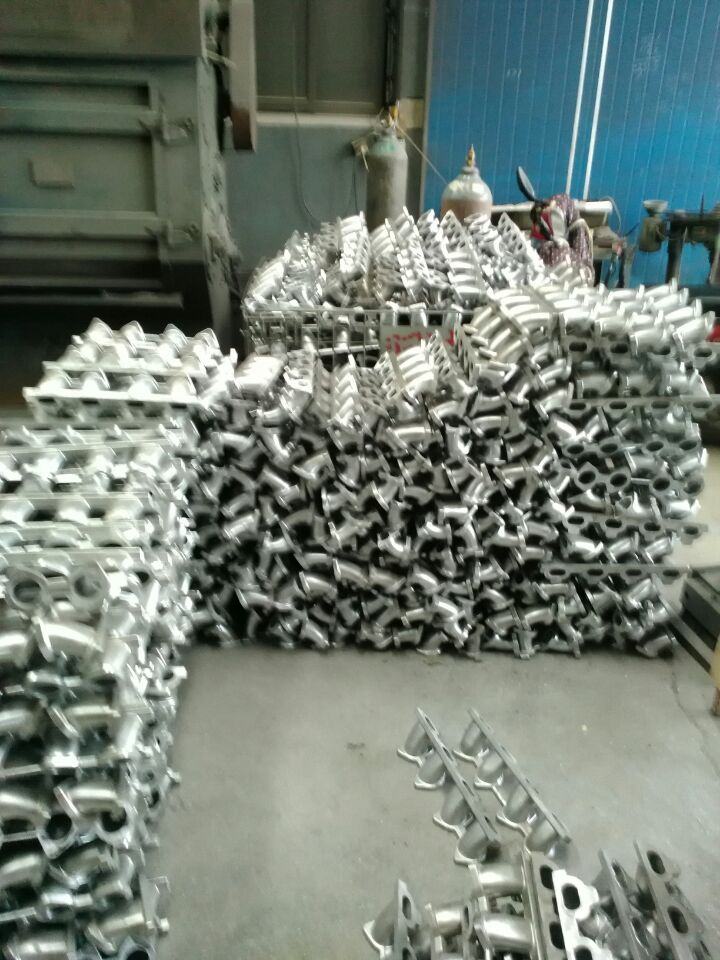
Future Trends in Aluminum Gravity Casting for Exhaust Manifolds
Impact of Electric Vehicles on Exhaust Manifold Design
As the automotive industry shifts toward electric vehicles (EVs), there is less reliance on traditional internal combustion engines, which means a reduced demand for exhaust systems. However, for hybrid and performance EV models that still require exhaust systems, the focus will be on creating lightweight, efficient parts. Aluminum gravity casting’s ability to reduce weight while providing excellent thermal management will be crucial in adapting to these new demands.
The evolution of EV designs may require new approaches to exhaust manifold design, with an emphasis on heat dissipation and material efficiency. Aluminum gravity casting will remain relevant by offering solutions that meet these evolving needs.
Sustainability: Recycling and Environmental Impact
Aluminum is highly recyclable, and the aluminum gravity casting process generates minimal waste compared to other methods. This aligns with the growing trend of sustainability in the automotive industry. By reducing material waste and energy consumption, aluminum gravity casting contributes to environmentally friendly manufacturing practices, which are becoming increasingly important to both consumers and regulators.
Aluminum’s recyclability and the reduced environmental footprint of gravity casting make it a key player in promoting sustainability in the automotive sector. Manufacturers can take advantage of this by using aluminum gravity casting to produce eco-friendly exhaust manifolds while maintaining high performance.
Conclusion
Aluminum gravity casting provides key benefits for manufacturing exhaust manifolds. Its ability to reduce weight, manage heat, and ensure durability makes it an ideal choice for automotive applications. This process also offers cost-effectiveness and environmental advantages, making it a long-term solution for modern vehicle manufacturing.
As the automotive industry prioritizes performance and sustainability, aluminum gravity casting will continue to play a significant role in producing high-quality exhaust manifolds. This method helps manufacturers achieve efficient production while reducing environmental impact.
Ningbo Joyo Metal Products Co., Ltd. offers products that leverage these benefits, providing solutions that enhance vehicle performance and meet sustainability goals.
FAQ
Q: What is an exhaust manifold, and why is it important?
A: An exhaust manifold is a component in an engine that collects exhaust gases from the cylinders and directs them to the exhaust pipe. It plays a crucial role in engine efficiency, performance, and emissions control.
Q: Why is aluminum gravity casting ideal for exhaust manifolds?
A: Aluminum gravity casting is perfect for exhaust manifolds due to its lightweight nature, excellent heat dissipation properties, and durability. These qualities help optimize engine performance and fuel efficiency while maintaining longevity.
Q: How does aluminum gravity casting improve heat dissipation in exhaust manifolds?
A: Aluminum's high thermal conductivity allows exhaust manifolds made through gravity casting to effectively dissipate heat, preventing overheating and ensuring optimal engine performance.
Q: What are the advantages of using aluminum gravity casting for exhaust manifolds over other methods?
A: Aluminum gravity casting offers precision, cost-effectiveness, and high durability. It outperforms methods like die casting and sand casting by providing better heat management and lighter components, which are essential for improved vehicle performance.
Q: How does the weight reduction of exhaust manifolds affect vehicle performance?
A: Reducing the weight of exhaust manifolds improves fuel efficiency, acceleration, and braking. Lighter components lead to better overall vehicle dynamics, resulting in improved performance and reduced energy consumption.

 English
 العربية
 Français
 Русский
 Español
 Português
 Deutsch
 italiano
 日本語
日本語 한국어
한국어 Nederlands
 Tiếng Việt
 ไทย
ไทย Polski
 Türkçe
 አማርኛ
አማርኛ ພາສາລາວ
 ភាសាខ្មែរ
 Bahasa Melayu
 ဗမာစာ
ဗမာစာ தமிழ்
தமிழ் Filipino
 Bahasa Indonesia
 magyar
 Română
 Čeština
 Монгол
 қазақ
қазақ Српски
 हिन्दी
 فارسی
فارسی Kiswahili
 Slovenčina
 Slovenščina
 Norsk
Norsk Svenska
 українська
 Ελληνικά
 Suomi
Suomi עברית
עברית Dansk
Dansk Afrikaans
 Gaeilge
 Eesti keel
 latviešu
 Беларуская мова
 Български
 Català
 Lietuvių
 Lëtzebuergesch
 Македонски